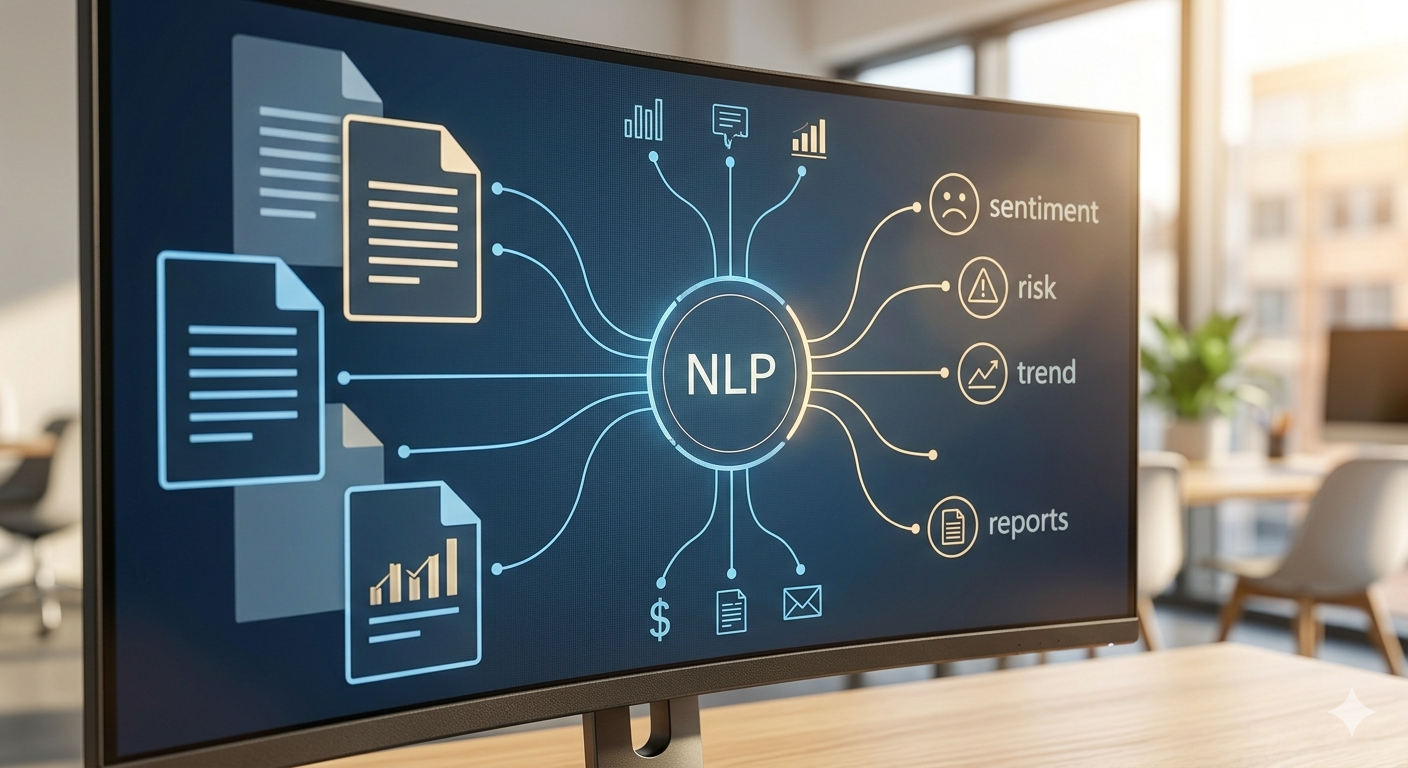
Finance teams are always under pressure to provide fast, accurate, and strategic insights, yet most financial reporting still relies on numerous spreadsheets and manual commentary. Natural Language Processing, NLP, is moving from a tech niche into a core finance tool because it finally solves the manual narrative problem. It’s about teaching machines to accurately process, interpret and produce human language in a way that’s useful for executives.
For CEOs, CFOs, and financial leaders, NLP represents more than automation. It is a shift from a manual week- or month-long process toward real-time, insight-driven finance. By automating report generation, analyzing financial documents, and surfacing key insights, NLP helps organizations streamline FP&A activities, reduce manual labor and human error, and make faster, more informed decisions.
What is Natural Language Processing?
Natural Language Processing (NLP) is a branch of artificial intelligence that enables computers to understand, interpret, and generate human language. In the context of finance, NLP serves both processing and analyzing unstructured financial text (such as reports, contracts, and transcripts) and automatically generates narrative financial reports directly from structured data. On the processing side, NLP reads large volumes of documents, earnings releases, management commentary, regulatory filings, and extracts key metrics, risks, and trends that would otherwise require hours of manual work. On the generation side, it converts financial data (actuals, budgets, forecasts) into clear written explanations, producing consistent, data-aligned narratives with minimal human intervention.
Modern NLP systems combine three core capabilities:
- Linguistic analysis: understanding financial terminology, grammar, and context
- Machine learning: detecting patterns and anomalies in both text and numerical data
- Data integration: linking quantitative results with qualitative, narrative explanations
Advances in large language models, from organizations like OpenAI and Anthropic, have significantly accelerated what is practical in finance today. Automated performance explanations that used to require an analyst can now be generated in seconds, tied directly to the underlying numbers.
How NLP Impacts Daily FP&A Activities?
NLP bridges the gap between raw data and a readable story. It can parse an earnings report, extract contract terms, or write up a summary of a financial statement. Modern systems use a combination of linguistic rules and machine learning to find patterns in text. Large language models, like those from OpenAI, have basically magnified this, allowing for automated performance explanations that don’t just sound human but are actually accurate to the numbers.
- Automated Financial Report Generation
One of the most immediate impacts of NLP is in generating financial commentary directly from data. Traditionally, analysts spend days drafting monthly or quarterly narratives, explaining revenue trends, cost variances, and performance drivers. NLP tools eliminate most of that repetitive writing.
Instead of manually writing “Operating expenses increased due to higher marketing spending,” an NLP system detects the cost deviation in the marketing accounts and generates that explanation automatically. The analyst no longer needs to be a reporter of the data; they can focus on interpretation and strategic recommendations.
- Faster Review of Financial Documents
FP&A teams constantly go through unstructured documents: earnings reports, investor presentations, contracts, and regulatory filings. Reading and summarizing these items is a significant time waste and an area where NLP delivers immediate value.
NLP can scan and summarize these materials quickly, flagging specific risks, obligations, or emerging trends that warrant attention. For example, JPMorgan Chase has applied this in practice, using NLP to analyze large volumes of financial and legal documents, cutting manual review time while improving accuracy and consistency across teams.
- Variance Analysis and Root-Cause Insights
Variance analysis is one of the most time-consuming parts of the monthly close. NLP accelerates this by automatically identifying the key drivers behind deviations between budget and actual results that would give analysts a starting point rather than requiring them to investigate from scratch.
Beyond speed, this also improves consistency. When explanations are generated from the same data source, every department is telling the same story, reducing the risk of conflicting narratives showing up in different executive reports.
- Reduction of Manual Labour and Human Error
Manual reporting is prone to errors, inconsistent wording, and version-control issues. NLP-driven automation standardizes financial language and ties commentary directly to data sources, improving reliability and making reports easier to audit.
For CFOs who need consistent messaging across board reports, investor communications, and internal dashboards, this consistency is a requirement.
What This Means Strategically?
When routine narrative work is automated, the finance team’s role changes. Analysts shift from being data reporters to strategic advisors, spending their time on scenario planning, forward-looking forecasts, and performance optimization rather than formatting slides and chasing commentary approvals.
Executives also, instead of waiting for manually compiled reports, receive continuously updated insights tied directly to live data. Decision cycles get faster because the information is already narrated, consistent, and ready.
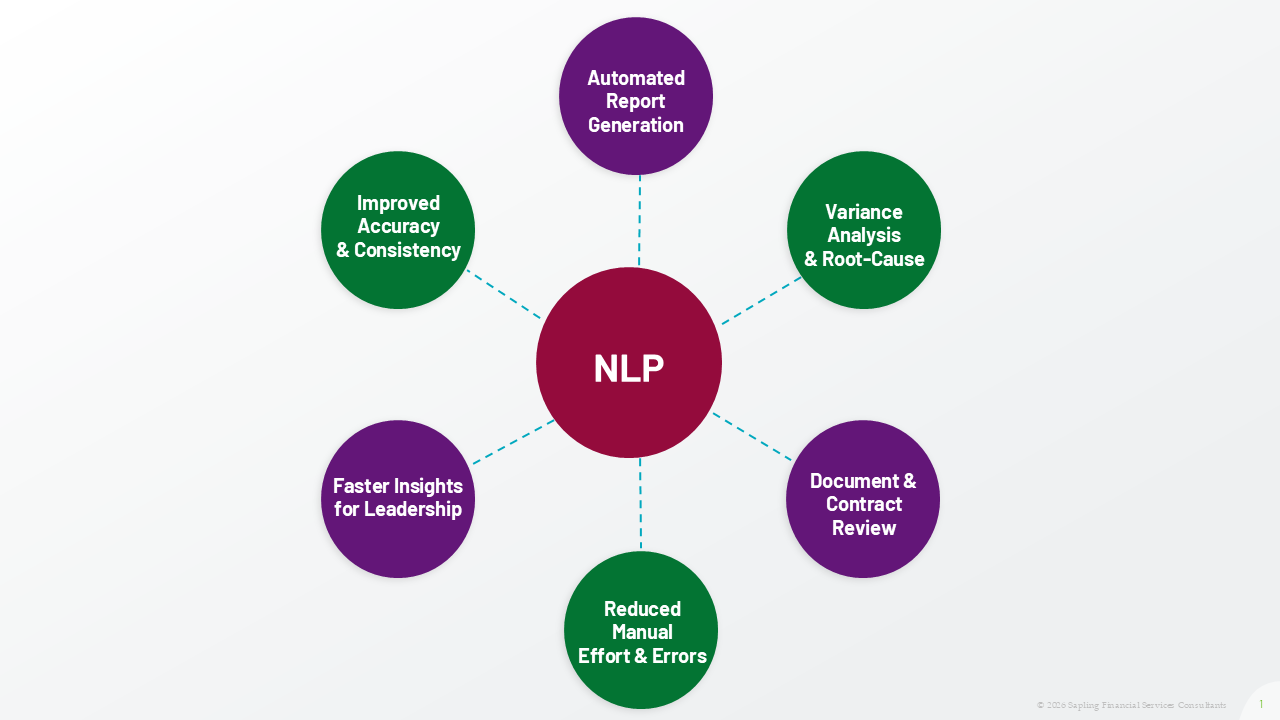
Exhibit A: The Benefits of NPL for CFOs, CEOs and financial analysts
Conclusion
Natural Language Processing is reshaping financial reporting by automating narrative generation, accelerating document analysis, and delivering faster insights across FP&A processes. For CEOs, CFOs, and financial analysts, it offers a practical path to streamline operations, reduce manual effort, and enhance decision-making speed.
The organizations that integrate NLP into their finance workflows now will gain a meaningful advantage, not only in efficiency, but in the quality and speed of the decisions they can make. The reporting mess is solvable.