
Over time, the practices employed by organizations to monitor performance have shifted towards automated reporting. Teams are now producing digital dashboards to monitor their sales, operations, cash flow, and other significant factors in real-time rather than relying on manual reporting.
However, this difference in speed is only meaningful if the information being presented to the executives and team leaders is accurate and reliable. The automated reports must not only look good, but must fulfill three key criteria to build trust with stakeholders: the numbers must be correct, the automatic generation of the reports must be reliable, and the numbers and business logic must be representative of the true outcomes that the stakeholders are trying to measure.
Exhibit A: Three Main steps to ensure Data integrity across reports
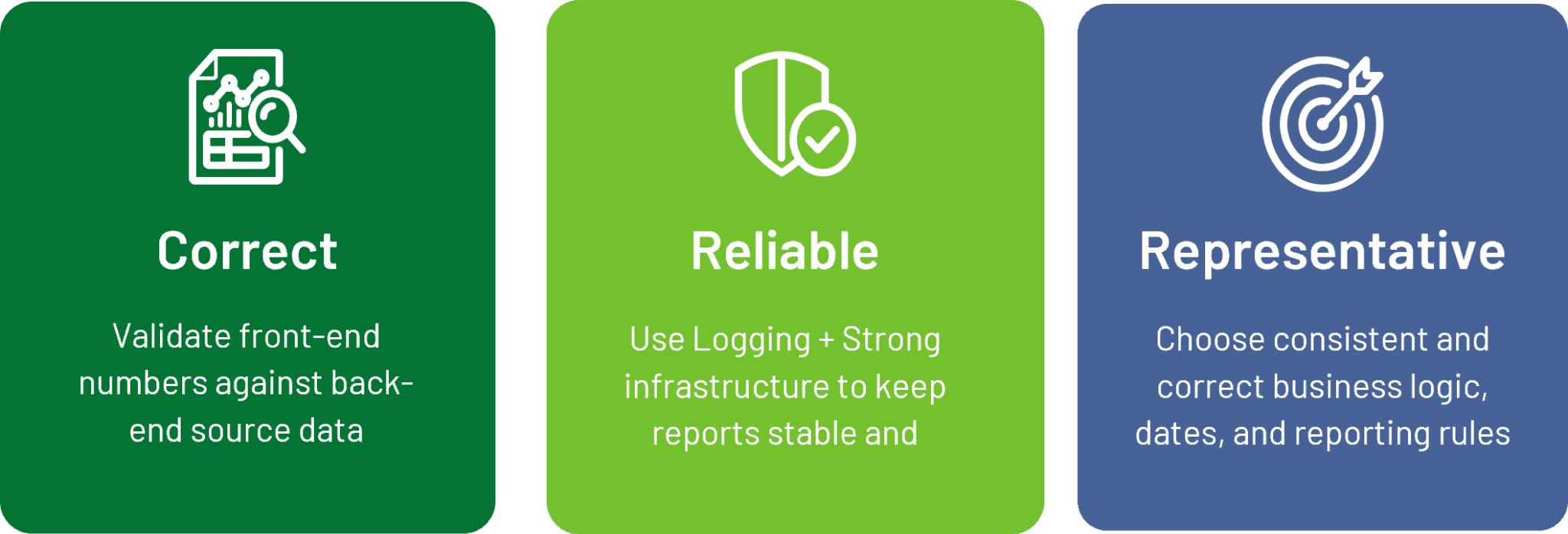
1. Ensure the Data Is Correct
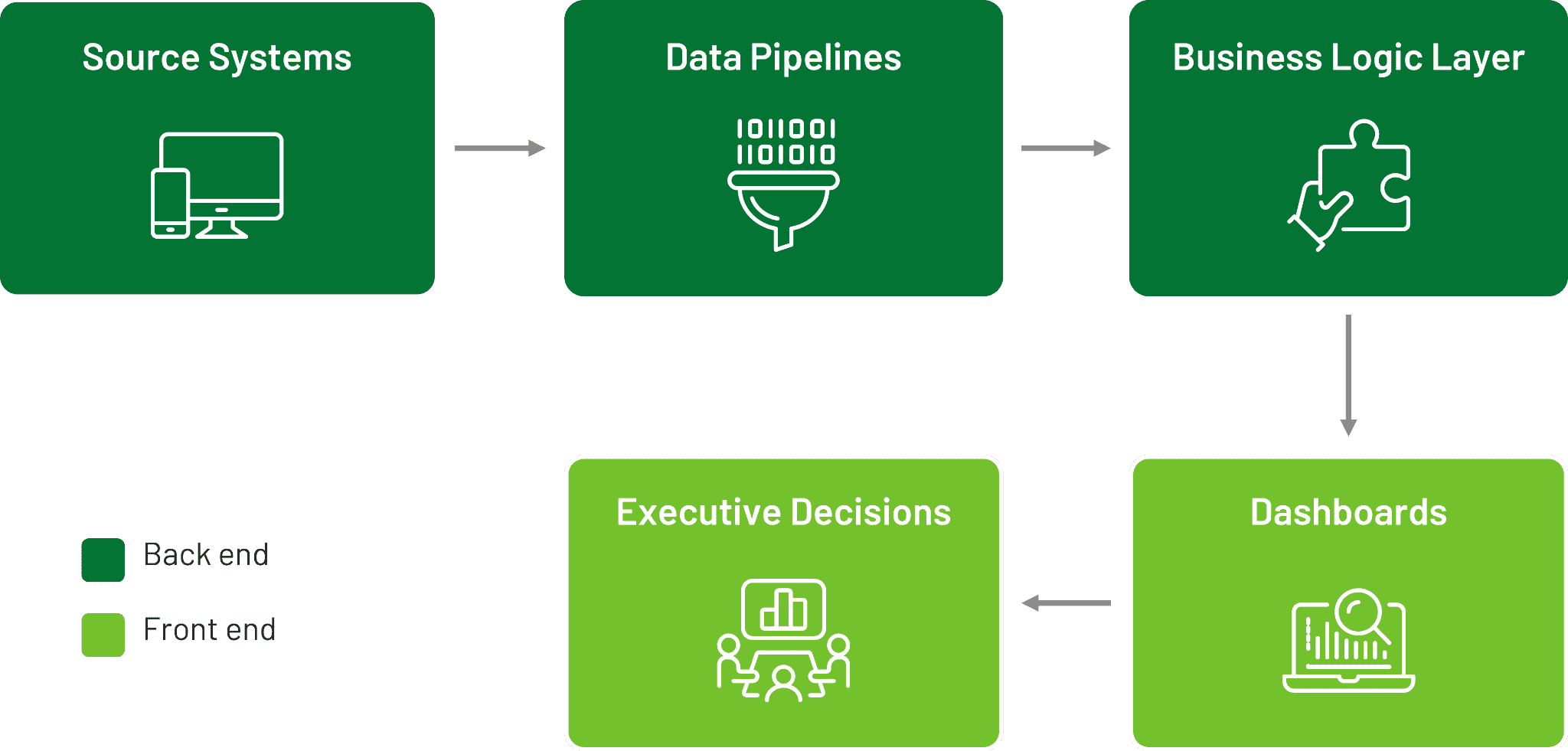
The first step in ensuring data integrity in automated dashboards is to check that the data presented on the dashboard is correct. This involves ensuring that all data presented on the dashboard has a clear path back to the data source and the calculation methodology is aligned with the business logic. A key step in ensuring correctness and reliability, is having a clear path of how data moves from the back end to the front end, as shown in Exhibit B. is captured end-to-end.
In addition to ensuring that data presented on the dashboard has a clear path back to the data source, performing a historical check on automated reports also ensures that unclear data logic or silenced errors are detected.
Exhibit B: Having a clear, traceable pattern from raw to presented data helps maintain transparency
Lastly, incorporating data reconciliation helps ensure that automated reports match raw source data. By comparing counts, totals, and metrics to their sources, businesses can identify instances of data gaps or misalignments and build confidence in the ongoing process.
2. Ensure the data represents reality
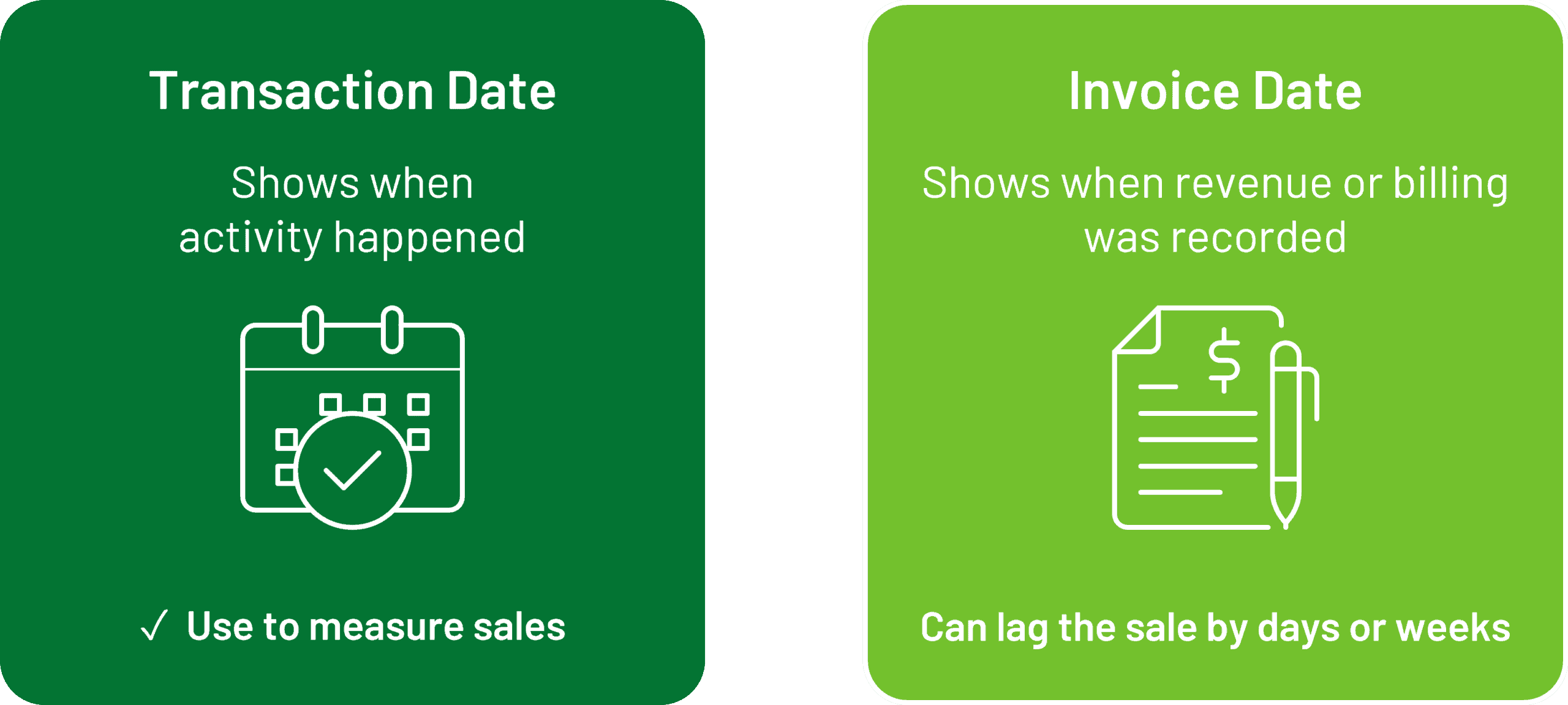
Data representing reality does not just mean that the data is accurate. Accurate data can be misleading in the larger scheme if reporting logic is incorrect. Take for instance accurately reporting on the sales activity of a company. A common issue seen is date selection: the correct accrual method to measure sales is using the transaction date rather than invoice date, especially for organizations that have a time gap between when the sales activity happened and when an invoice is issues for the transaction (see Exhibit C). Making this mistake can shift results and put forth inaccurate representation.
Exhibit C: Using the correct date for your reporting purposes ensures accuracy
Another important consideration is ensuring that data is captured correctly in the systems and up to date. Take for instance businesses that focus on project work and tracks the project status in an ERP or a project management system. It is possible that an existing system defines an item as complete, closed, or active based on certain rules, but this may not be in line with what a team would want to see in terms of defining project completion. If the report is based on a status without defined logic, then values are placed in an ambiguous area where a pattern cannot be defined and values can be misrepresented.
3. Ensure the reports are reliable
Maintaining a technically reliable report will always depend on a reliable system. This can be achieved by using logger tools to ensure that potentiall data isuees and errors are flagged and the health of the report system is consistently analyzed. This helps in catching failed refreshes and broken connections, among other common issues. Maintaining a strong IT infrastructure is also crucial in maintaining data pipelines and overall, in creating stability within the reporting process.
Conclusion
The value of automated reports lies in the capability providing leaders insights more quickly, but this only has value if the numbers are able to accurately represent reality.
When the speed of automated reporting is combined with accuracy, business logic, and reliability, it become a powerful tool for business decisions. Ultimately, the use of automated reporting will result in a more rapid and high-quality decision-making process.
Checklist – Data Integrity